What Is a Life Calendar? The Chart of Weeks, Explained
A life calendar turns a chosen horizon into a grid of weeks. Where the modern version came from, what it can offer, and what it cannot predict.

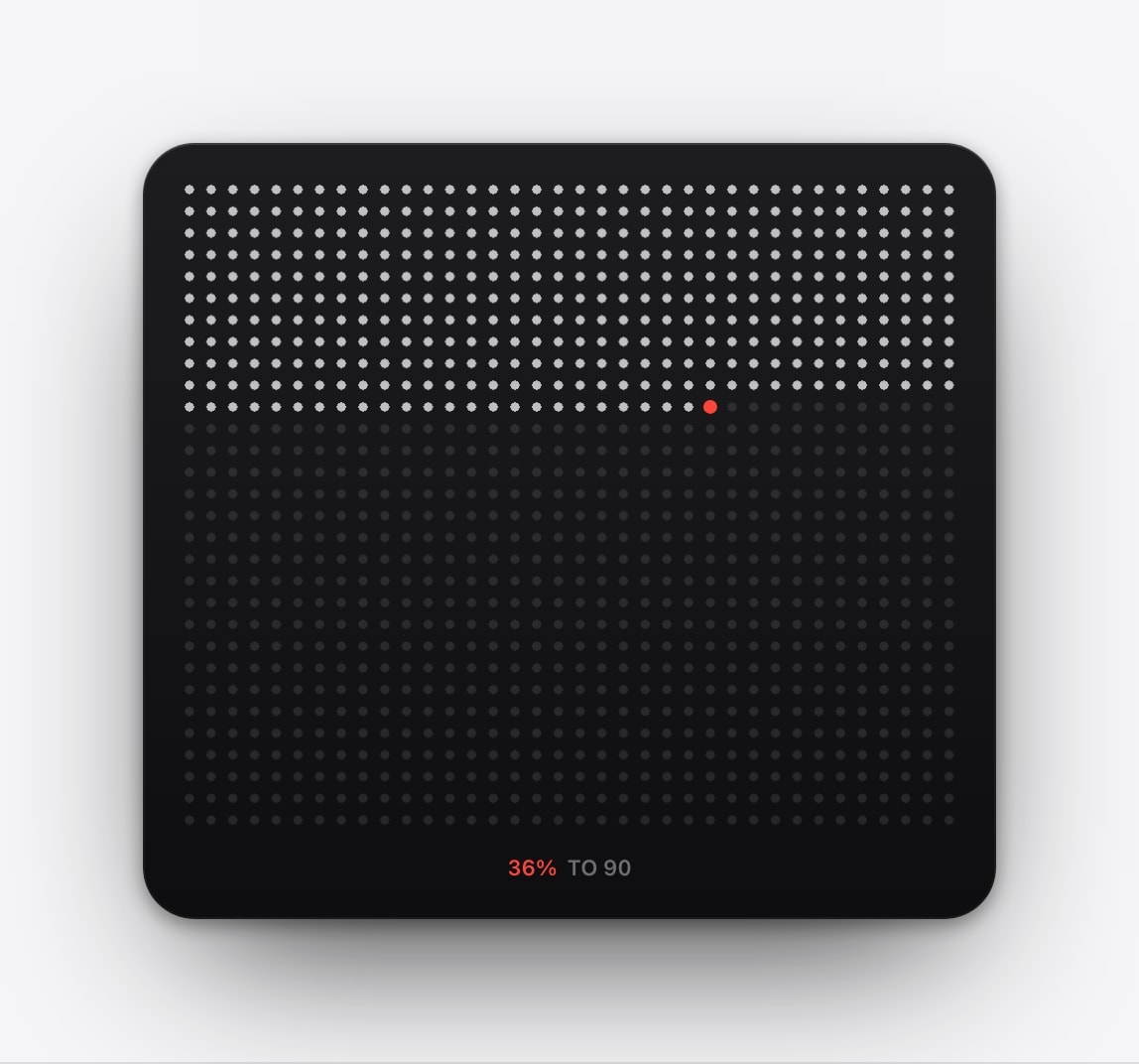
A life calendar is a grid where every small square is one week. The weeks you have already lived are filled in, the rest are left open, and the whole of a human lifespan fits on a single sheet of paper or a single phone screen.
The modern version comes from Tim Urban’s 2014 essay Your Life in Weeks, which drew 90 rows of 52 squares and made the point that a long life is a surprisingly small number of boxes. Other versions use 80 years, a chosen target age, or months and years instead of weeks.
What it is not is a forecast. The last row is where the drawing stops, chosen because a picture needs edges, and it carries no information about anybody’s health, luck or actual lifespan.
Why weeks, and where the familiar grid comes from
The choice of unit is the whole design. Years are too coarse: eighty squares is a small enough number to feel abstract, and a single square covering a year hides everything that happens inside it. Days are too fine, since thirty thousand cells is a texture rather than a picture, and you cannot find yourself in it. Weeks sit in the useful middle, small enough to correspond to something real like a holiday or a project, and few enough that ninety years still fits on one page.
Urban’s chart used 90 rows and 52 columns, which is 4,680 cells. That is not quite the real number of weeks in ninety years, for reasons covered in the arithmetic further down, but the regularity is what makes the image readable. Oliver Burkeman later borrowed a related figure for the title of Four Thousand Weeks, his book about finitude, and four thousand is likewise a memorable round number rather than an average.
What people actually do with it
- Get some perspective
Seeing a decade as five hundred squares makes a long-range plan feel concrete in a way that “in ten years” never does.
- Record chapters
On a printed version, people colour blocks for school, a city, a job or a relationship. The grid turns out to be a decent map of a life once it has some marks on it.
- Prompt a decision
The chart is good at raising the question of what the next season is for, and completely silent on what the answer should be.
- Reframe the past
Grouping past weeks into chapters is a more useful reading than scoring them, and it is the reading most people arrive at after living with one for a while.
A healthy way to read it
Reactions to this chart split more sharply than to almost any other productivity object. Some people find it immediately clarifying and keep one for years. Others find it morbid, or find that it turns ordinary weeks into a quiet accusation. Both responses are reasonable, and a tool for perspective should be easy to put down.
The failure mode worth naming is treating each square as a scoring opportunity. Rest, illness, caring for somebody, and long stretches of unremarkable ordinary time are all life rather than gaps in it. The grid makes the case that time is finite; it makes no case at all that every week should be exceptional, and reading it that way is a good way to feel worse for no return.
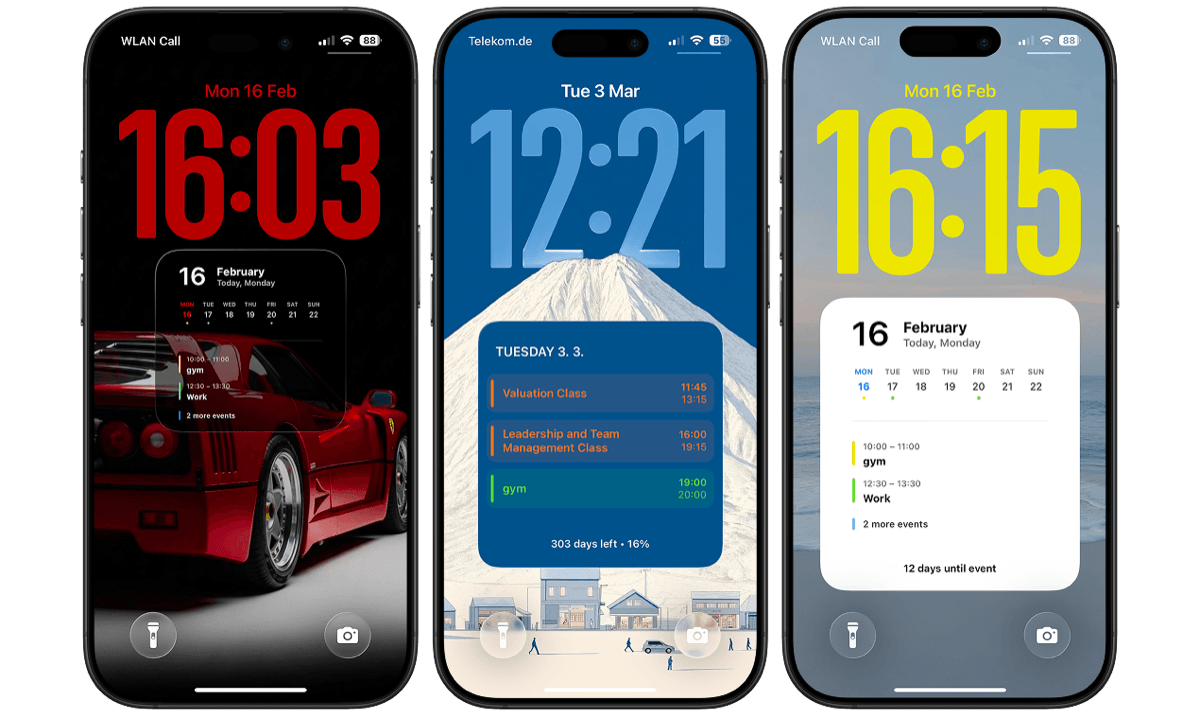
A year view carries the same idea with less weight. If the whole-life version feels heavy, a year-progress wallpaper gives you the same sense of movement without asking you to look at an entire lifespan every morning.
A picture, not an instruction
A life calendar can make you notice time. It has nothing to say about how you should spend it, and any version that claims otherwise has added something that was not in the drawing.
Keep it if it brings your attention to what matters. Change it for something quieter if all it brings is pressure.
Questions people ask
A grid representing a chosen life horizon, usually one square per week, with the weeks already lived filled in and the rest left open.
Time grids have existed in various forms for a long time. Tim Urban popularised the modern 90-year weeks version in his 2014 Wait But Why essay.
No. The target age is only the edge of the picture.
A week is small enough to correspond to something real and large enough that a whole life still fits in one readable view.
Not necessarily. Many people use it for perspective or reflection. If it creates pressure or distress, it is worth removing.